Ice Baths & Cold Plunges for Soccer Players
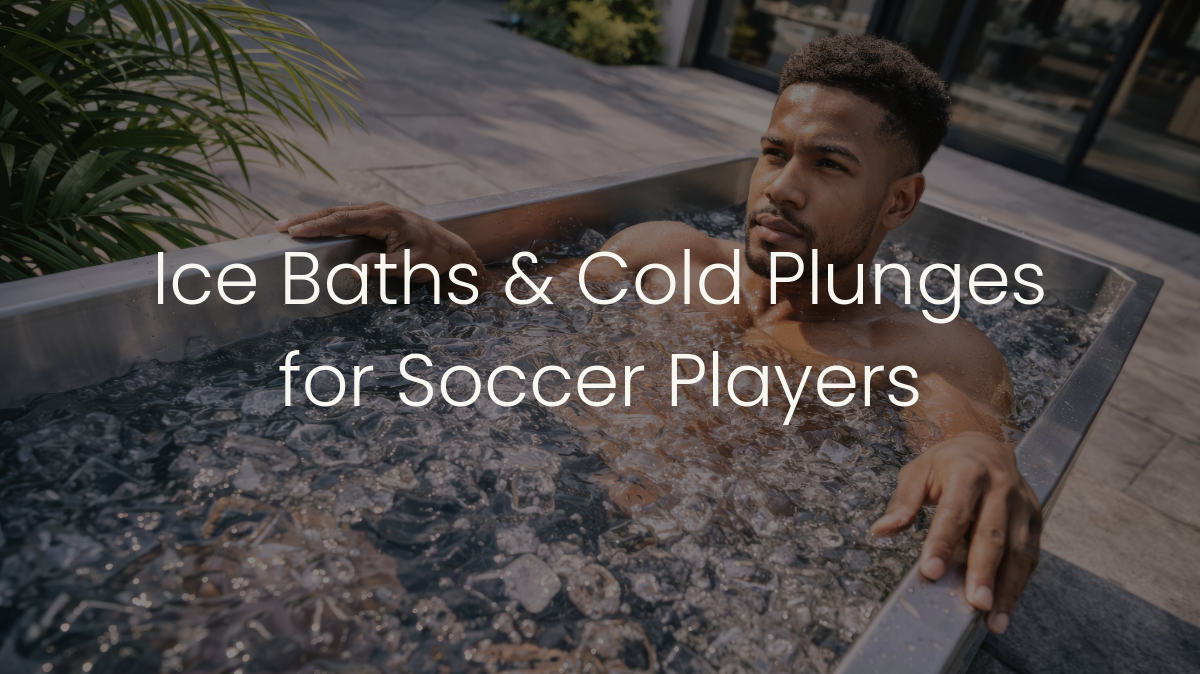
Scroll through social media or watch any professional locker room, and you’ll see the same thing: players stepping into freezing tubs, grimacing, breathing hard, and calling it recovery.
Ice baths, also known as cold water immersion (CWI) or cold plunges, have become one of the most talked-about recovery tools in modern soccer.
But here’s the real question:
👉 Do ice baths actually improve performance?
👉 When should soccer players use them, and when should they avoid them?
👉 Are they worth buying at home?
This guide breaks it all down: the science, the benefits, the risks, the protocols, and exactly how soccer players should use cold plunges to maximize performance.
What Is an Ice Bath (Cold Plunge)?
An ice bath is a form of cryotherapy, where athletes submerge their body in cold water (typically 40-59°F / 5-15°C) for a short period after training or games.
The goal is simple:
Reduce muscle soreness
Speed up recovery
Prepare the body for the next session
It’s been used for decades across sports like:
Soccer
Basketball
Rugby
Track & field
But while it’s popular, the science behind it is more nuanced than most people think.
How Ice Baths Actually Work (The Science)
When your body enters cold water, several things happen almost immediately:
1. Blood Vessel Constriction (Vasoconstriction)
Cold water causes blood vessels to tighten, reducing blood flow to muscles.
This helps:
Decrease swelling
Reduce inflammation
Limit tissue damage
2. Reduced Inflammation & Muscle Damage
Cold exposure lowers metabolic activity in muscle tissue, slowing the inflammatory response.
This can:
Reduce soreness
Limit muscle breakdown
Help athletes feel “less beat up”
3. Nervous System Reset
Cold exposure activates the parasympathetic nervous system (your recovery system), helping:
Lower stress
Improve relaxation
Enhance recovery between sessions
4. Rewarming Effect (Circulation Boost)
After leaving the cold water, blood flow increases rapidly, which may help flush waste products and deliver nutrients.
The Proven Benefits of Ice Baths for Soccer Players
Let’s separate hype from evidence.
1. Reduced Muscle Soreness (The Most Proven Benefit)
This is the strongest, most consistent benefit.
Studies show cold water immersion:
Reduces delayed onset muscle soreness (DOMS)
Helps athletes feel fresher within 24-48 hours
👉 For soccer players with frequent games or tournaments, this is huge.
2. Faster Recovery Between Games
Soccer is a repeat-effort sport:
Sprint → recover → sprint again
Train → play → recover → repeat
Cold plunges may help you:
Recover faster
Perform better in your next session
3. Reduced Inflammation & Swelling
Cold water reduces:
Micro-tears in muscle
Inflammatory markers
Tissue swelling
This is especially helpful after:
High-intensity matches
Long tournaments
Double training days
4. Mental Toughness & Focus
Cold exposure forces your body into a stress response:
Increased alertness
Controlled breathing
Mental discipline
Many athletes report:
Improved focus
Increased resilience
Better stress tolerance
5. Potential Sleep & Mood Benefits
Some research suggests:
Lower stress levels
Improved sleep quality (in some populations)
For athletes juggling:
School
Training
Competition
This can be a hidden advantage.
The Downsides (What Most People Don’t Talk About)
Ice baths are not a magic solution, and in some cases, they can actually hurt performance gains.
1. Can Reduce Muscle Growth & Strength Gains
Here’s the biggest controversy:
Cold plunges may blunt muscle adaptation, especially after strength training.
Why?
Cold reduces:
Blood flow
Protein synthesis
Muscle-building signals
Research shows:
Lower protein absorption
Reduced hypertrophy (muscle growth)
👉 Translation: If you’re trying to get stronger or build muscle (especially in offseason), ice baths right after lifting may slow your progress.
2. Mixed Scientific Evidence Overall
While soreness reduction is supported, broader performance benefits are unclear.
Research shows:
Some improvement in recovery
Limited evidence for long-term performance gains
👉 Ice baths help you feel better, but may not always make you better.
3. Risk of Hypothermia & Shock
Cold exposure isn’t risk-free.
Potential risks include:
Hypothermia
Cold shock response
Heart rhythm issues (especially for those with conditions)
4. Not Necessary for Most Youth Players
Most high school athletes:
Don’t train at pro-level intensity
Don’t need daily cold plunges
For many, proper recovery habits (sleep, nutrition, hydration) matter more.
When Soccer Players SHOULD Use Ice Baths
Ice baths are a tool, not a daily habit.
Use them strategically.
✅ Best Times to Use Ice Baths
1. After Matches or Tournaments
Multiple games in a short time
High fatigue
Heavy soreness
👉 Ideal use case
2. During In-Season Play
2-3 games per week
Need fast recovery
3. After High-Intensity Sessions
Sprint-heavy training
Conditioning days
4. During Travel & Heat Exposure
Helps regulate body temperature
Reduces fatigue
When Soccer Players SHOULD AVOID Ice Baths
❌ After Strength Training (Important)
If your goal is:
Building muscle
Getting stronger
👉 Avoid cold plunges immediately after lifting.
❌ During Offseason Muscle-Building Phases
You want:
Adaptation
Growth
Strength gains
Cold exposure can interfere with that.
❌ If You Have Certain Health Conditions
Avoid or consult a doctor if you have:
Heart issues
Circulation problems
Respiratory conditions
The Ideal Ice Bath Protocol for Soccer Players
Keep it simple and effective.
Temperature
50-59°F (10-15°C) is effective
You don’t need extreme freezing temps
Duration
5-10 minutes (most effective range)
Max: 15 minutes
Frequency
2-4 times per week (in-season)
Not daily
Timing
Immediately after matches
Or within 1-2 hours post-exercise
Beginner Tip
Start with:
2–3 minutes
Gradually increase
Ice Baths vs Cold Showers vs Cryotherapy
Let’s compare:
Ice Baths
✔ Most effective for full-body recovery
✔ Cheapest long-term
❌ Hardest mentally
Cold Showers
✔ Easier
✔ Safer
✔ Still beneficial for mood & recovery
Cryotherapy (Cold Chambers)
✔ Quick
✔ Controlled environment
❌ Expensive
❌ Not proven to be better than ice baths
👉 For most soccer players, cold showers + occasional ice baths are enough.
Should You Buy a Cold Plunge Tub?
This depends on your level and commitment.
Who SHOULD Consider Buying One
Serious high school players aiming for college
Club players training 5-6 days/week
Athletes in heavy competition cycles
Families investing in long-term development
Who DOESN’T Need One
Casual players
Younger athletes
Those not training consistently
What to Look for in a Cold Plunge
1. Size & Comfort
You need:
Full-body immersion
Comfortable sitting position
2. Temperature Control
Some tubs require ice
Others have built-in chillers
3. Portability
Inflatable vs hard-shell
Indoor vs outdoor
4. Budget
Budget Options ($50-$150)
Bathtub + ice
DIY bin setup
Mid-Range ($150-$500)
Inflatable plunge tubs
Portable setups
High-End ($1,000-$5,000+)
Built-in chillers
Temperature-controlled systems
Professional-grade recovery tools
👉 Truth: You can get 90% of the benefit with a basic setup.
What Actually Matters MORE Than Ice Baths
If you’re serious about improving your game, prioritize:
1. Sleep
8+ hours per night
2. Nutrition
Protein, carbs, hydration
3. Training Quality
Speed
Strength
Technical work
4. Recovery Habits
Stretching
Mobility
Active recovery
Ice baths are a bonus tool, not the foundation.
Final Verdict: Are Ice Baths Worth It for Soccer Players?
✅ YES - if used correctly
Reduce soreness
Improve short-term recovery
Help you perform more consistently
⚠️ BUT - they are not magic
Won’t replace training
Won’t automatically improve performance
Can interfere with muscle growth if misused
The Bottom Line
Ice baths are one of the most misunderstood tools in soccer performance.
They are:
Effective for recovery
Useful in-season
Powerful when used strategically
But they are NOT:
Necessary every day
Essential for beginners
A replacement for proper training
If You Want to Use Ice Baths Like a Pro Soccer Player
Follow this simple rule:
👉 Use cold plunges to recover, not to build.
Recover = YES
Build muscle = NO
Use them after:
Matches
Hard training days
Avoid them after:
Strength sessions
Growth-focused phases
The best players don’t just train harder, they recover smarter.
Ice baths can be a powerful part of your routine, but only if you understand when and why to use them.
Because in soccer, the difference isn’t just how hard you train… It’s how well you recover.