The Best No Equipment Exercises for Soccer Players
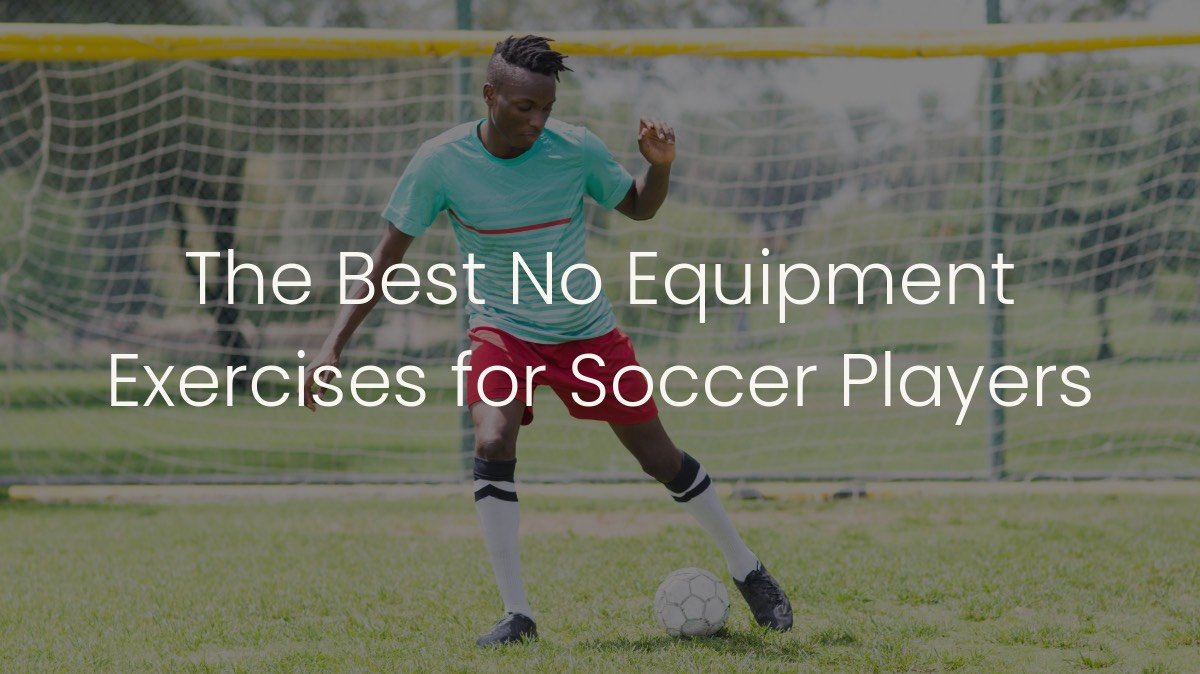
Soccer is a sport built on movement. Speed, balance, acceleration, strength, agility, endurance, explosiveness - you need all of them. That’s why the best players train more than just their shot or their dribbling. They train their body to perform at a higher level.
But here’s the truth: You don’t need a gym to become a stronger, faster, more explosive soccer player. Some of the most effective training for soccer players can be done with ZERO equipment, anywhere, anytime.
Bodyweight workouts:
Improve functional strength
Build real-game movement patterns
Increase speed and agility
Strengthen your core and balance
Reduce injury risk
Require no weights, machines, or cost
This guide breaks down the 25 best bodyweight exercises for soccer performance, how to structure them, and how to use them to get ahead of your competition - even if all you have is a small patch of grass and your own determination.
Why Bodyweight Training Is So Important for Soccer Players
Soccer movements are explosive, multi-directional, and unpredictable. Bodyweight training improves:
⭐ Strength without adding unnecessary bulk
Soccer players need functional strength, not heavy lifting numbers.
⭐ Explosive acceleration & sprint mechanics
Quickness is trained through bodyweight plyometrics and technique drills.
⭐ Agility & balance
Soccer is played on one leg more than two: bodyweight exercises fix that.
⭐ Injury prevention
Most soccer injuries come from weak hips, glutes, hamstrings, and unstable knees — bodyweight strength prevents this.
⭐ Core stability
Every shot, sprint, turn, and chop begins with a stable core.
Bodyweight training builds the engine behind your technique.
THE 25 BEST BODYWEIGHT EXERCISES FOR SOCCER PLAYERS
We’ll break these into 5 categories:
Lower Body Strength
Explosiveness & Power
Speed & Agility
Core & Stability
Injury Prevention & Mobility
Each category includes why it matters + the top exercises.
1. Lower Body Strength (Critical for Power, Shooting, Speed & Stability)
Lower body strength is the base of every soccer movement: sprinting, deceleration, changing direction, shielding, and striking the ball. Without strong legs and hips, your technique falls apart under pressure.
1. Bulgarian Split Squats
What it improves:
Single-leg strength
Balance
Shooting power
Sprint mechanics
This is one of the BEST exercises for soccer players because the sport is mostly single-leg movement.
2. Glute Bridges / Single-Leg Glute Bridges
Benefits:
Explosive acceleration
Hamstring + glute strength
Injury prevention
Weak glutes = slow acceleration and higher ACL risk.
3. Reverse Lunges
Great for building knee stability and reducing ankle/knee stress.
4. Lateral Lunges
Soccer is not linear - lateral lunges build the ability to cut, defend, and change direction.
5. Calf Raises + Soleus Raises
Soccer requires strong calves for:
Sprinting
Cutting
Jumping
Injury prevention (especially Achilles)
The soleus (lower calf) is the most important muscle for sprinting and is trained best with bent-knee calf raises.
6. Nordic Curl (Assisted Version)
Even without equipment, an assisted Nordic curl dramatically increases hamstring strength — essential for speed and injury prevention.
2. Explosive Power (The Secret to Beating Players 1v1)
Power = Strength + Speed
For attackers especially, power determines whether you can burst away from defenders.
7. Broad Jumps
Build pure horizontal power - the engine of acceleration.
8. Tuck Jumps
Improves vertical explosiveness + overall athleticism.
9. Bounding
Bound like a sprinter: long, exaggerated strides.
Great for:
Acceleration mechanics
Sprint power
Rhythm and coordination
10. Single-Leg Box Jumps (onto a safe surface)
If no box, jump onto a curb or low platform.
Develops unilateral power — huge for wingers and forwards.
11. Skater Bounds (Lateral Plyos)
Game-changing for wingers and defenders who rely on lateral explosiveness.
3. Speed & Agility (More Important Than Ever)
Speed is the most recruited trait in modern soccer. If you're fast, everything else becomes easier.
You don’t need cones, use landmarks, lines, or even shoes as markers.
12. Acceleration Starts
Short bursts:
5m
10m
15m
Focus on knee drive, forward lean, and powerful first steps.
13. High Knees (Proper Form, Not Just Quick Feet)
Great for improving running mechanics.
14. A-Skips
Perfect for sprint form, coordination, and rhythm.
15. Lateral Shuffles (Game-Speed)
Improves defending footwork and quick transitions.
16. 5-10-5 Change of Direction Drill
Classic combine drill and one of the best for defenders and midfielders.
17. Shuttle Sprints
You rarely sprint in a straight line for more than 40 yards in soccer.
Shuttles build real soccer endurance.
4. Core & Stability (The Foundation of Every Soccer Movement)
A strong core isn’t about six-pack abs - it’s about control, balance, and power transfer.
18. Plank Variations
Try:
Standard plank
Side plank
Plank with shoulder taps
Your “center” needs to be rock-solid.
19. Dead Bugs
One of the best exercises for building athletic core stability.
20. Single-Leg Balance (with variations)
Why? Soccer is single-leg dominant.
Add variations:
Eyes closed
Knee drive
Toe taps
Rotations
21. Copenhagen Plank (Assisted Version)
This trains the adductors - the MOST undertrained muscle group in soccer.
Weak adductors = groin strains.
5. Injury Prevention & Mobility (Longevity > Everything)
Elite players aren’t just explosive - they’re durable.
22. Hip Mobility Flow
Soccer requires:
Hip rotation
Flexibility
Stability
Explosive movement
Hip mobility protects:
Groin
Lower back
Hamstrings
23. Ankle Mobility Drills
Improves:
Turning
Jumping
Landing
Balance
Shooting mechanics
24. Hamstring Sliders (Using a Towel or Socks on Floor)
If you’re indoors, use a towel on hardwood.
One of the top injury-prevention exercises for soccer players.
25. Deep Squat Hold
This improves:
Hip mobility
Ankle mobility
Balance
Lower-body coordination
Holding this for 30–60 seconds daily drastically reduces injury risk.
How to Combine These Exercises Into a High-Performance Weekly Plan
Here’s a perfect 3-day bodyweight training template (no equipment required).
⭐ DAY 1: Strength + Power
Warm-up (5 minutes)
Jog or high knees
Dynamic stretches
Mobility flow
Strength Block
Bulgarian Split Squats – 3×10 each leg
Reverse Lunges – 3×12 each
Glute Bridges – 3×15
Calf Raises – 3×20
Power Block
Broad Jumps – 3×5
Tuck Jumps – 3×8
Core
Dead Bugs – 3×10 each side
Plank – 1 minute
⭐ DAY 2: Speed + Agility + Stability
Warm-up
A-Skips – 2×20 yards
High Knees – 2×20 yards
Speed Work
10m acceleration – 4 reps
20m sprint – 3 reps
30m build sprint – 2 reps
Agility Block
5–10–5 drill – 4 reps
Lateral Shuffles – 3×20 seconds
Skater Bounds – 3×12 each side
Stability
Single-Leg Balance – 2×45 seconds
Side Plank – 45 seconds each
⭐ DAY 3: Strength + Injury Prevention + Recovery
Warm-up
Light jog
Mobility
Strength Block
Lateral Lunges – 3×10 each
Single-Leg Glute Bridges – 3×12 each
Assisted Nordic Curls – 3×6
Injury Prevention
Copenhagen Plank – 2×15 seconds
Hamstring Sliders – 3×10
Mobility / Recovery
Deep squat hold – 60 seconds
Hip mobility flow – 3–5 minutes
Ankles + hips routine
Why Bodyweight Training Works Better Than You Think
Many players assume you need a full gym to get “college-ready.”
But bodyweight training:
Builds functional strength
Mimics the demands of the game
Emphasizes acceleration and deceleration
Enhances technical movements
Strengthens stabilizers that prevent injury
Doesn’t overload joints the way heavy lifting can
Professional academies — including those in Europe — often dedicate entire training blocks to bodyweight development.
Because the goal isn’t lifting heavy.
The goal is moving better.
How Often Should Soccer Players Do Bodyweight Workouts?
⭐ In Spring (off-season)
3–4 days/week - This is your growth season.
⭐ In Summer (preseason)
2–3 days/week - Maintain strength while adding intensity through training and games.
⭐ In Fall (in-season)
1–2 days/week - Just enough to stay strong and injury-resistant.
Signs Your Bodyweight Program Is Working
You’ll see improvements within 4–6 weeks:
✔ Faster acceleration
✔ Sharper change of direction
✔ Better balance on the ball
✔ Stronger challenges & duels
✔ Higher shot power
✔ Improved endurance
✔ Fewer injuries
✔ More confidence in your own athleticism
These are the traits college coaches - and high-level scouts - immediately notice.
Common Mistakes Soccer Players Make With Bodyweight Training
❌ Doing random workout - You need structure and progression.
❌ Overtraining - If you're exhausted, your speed and technique drop.
❌ Ignoring strength - Lots of players only do skills and fall behind physically.
❌ Neglecting mobility - Stiff, tight players get injured.
❌ Not focusing on single-leg work - Soccer is played on one leg. Train like it.
❌ Forgetting about recovery - Hydration, sleep, and rest matter just as much as reps.
Recommended Weekly Schedule for High School Soccer Players
Here’s an ideal structure if you have training + school + limited time:
Monday: Strength + Power
Tuesday: Speed + Ball Work
Wednesday: Recovery / Light Technical
Thursday: Strength + Agility
Friday: Shooting / Technical + Mobility
Saturday: Match play
Sunday: Rest
This schedule ensures:
Injury prevention
Strength gains
Speed development
Technical sharpening
Peak performance by fall
Conclusion: Your Body Is Your Competitive Advantage - Build It Without Equipment
You don’t need a gym membership, fancy weights, or professional equipment to train like an elite athlete.
You need:
A plan
Intention
Consistency
The right exercises
The desire to improve
Bodyweight training gives you every physical tool you need to take your game to the next level, whether you want to make varsity, dominate your league, or play college soccer.
Spring is the perfect time to start this work.
Fall is when the results show.