Preseason Recovery Checklist for Soccer Players
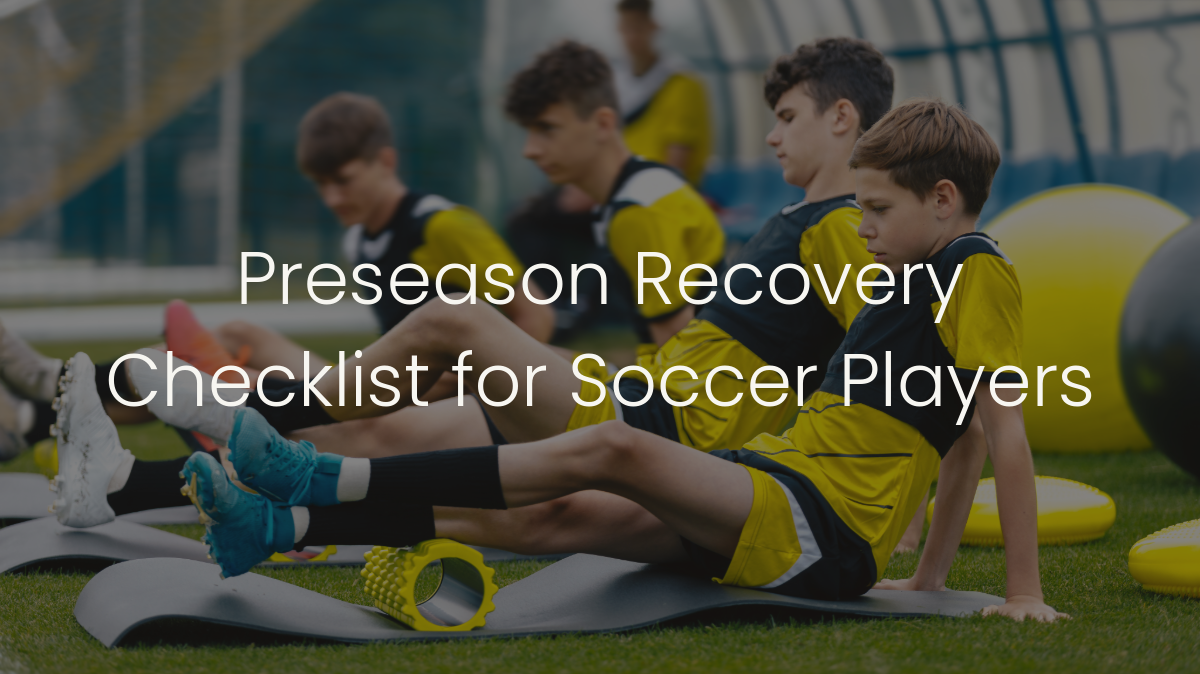
Preseason is one of the most physically demanding periods of the soccer calendar.
Training volume increases. Sessions become faster. Fitness testing begins. Players compete for roles. Scrimmages become more intense. Coaches introduce new tactical expectations, and athletes are often asked to perform while their bodies are still adapting to the workload.
This is why recovery cannot be treated as something you do only when you feel sore.
Recovery must be part of the plan from the beginning.
The players who perform best throughout preseason are not always the ones who complete the most extra workouts. They are often the ones who manage their total workload, sleep consistently, fuel properly, hydrate before they are thirsty, and respond quickly to warning signs.
Training creates the stimulus for improvement.
Recovery is where the body adapts to that stimulus.
Without adequate recovery, even a well-designed training program can lead to heavy legs, declining speed, poor concentration, increased soreness, illness, burnout, or injury.
This checklist is designed to help soccer players recover more intentionally throughout preseason. It can be used by youth, high school, college, academy, semi-professional, and adult players, although individual needs will vary.
The goal is not to eliminate all fatigue. Some tiredness is normal during preseason.
The goal is to recover enough that you can continue producing quality work.
Why Recovery Matters During Preseason
Soccer places several different demands on the body at the same time.
A typical preseason session may include:
Sprinting
Repeated accelerations
Decelerations
Changes of direction
Jumping
Physical contact
Technical work
Tactical learning
Conditioning
Strength training
Each of these creates stress.
The body must repair muscle tissue, restore energy stores, regulate inflammation, recover the nervous system, and process new technical and tactical information.
If training stress repeatedly exceeds your ability to recover, your performance may begin to decline.
You may notice:
Slower sprint times
Heavy or unresponsive legs
Reduced motivation
Poor sleep
Increased irritability
Loss of appetite
Persistent muscle soreness
Difficulty concentrating
Decreased technical quality
Frequent minor illnesses
Recurring aches and pains
These signs do not always mean you must stop training completely. They mean you should evaluate your workload and recovery habits before the problem becomes worse.
The Daily Preseason Recovery Checklist
Use the following checklist every day during preseason.
You do not need to complete every item perfectly. However, consistently missing several areas can make it difficult to tolerate the demands of training.
1. Did You Sleep Enough?
Sleep is the foundation of recovery.
During sleep, the body repairs tissue, restores energy, supports immune function, regulates hormones, and processes new information.
For soccer players, sleep also supports:
Reaction time
Coordination
Decision-making
Learning
Emotional control
Sprint performance
Muscle recovery
Most athletes should aim for approximately eight to ten hours of sleep per night, particularly during demanding preseason periods.
Individual sleep needs vary, but regularly getting six hours or less is unlikely to support high-level training.
Sleep Checklist
Did I get at least eight hours of sleep?
Did I go to bed at a consistent time?
Did I avoid caffeine late in the day?
Did I reduce screen use before bed?
Was my room cool, quiet, and dark?
Did I wake up feeling reasonably refreshed?
One poor night does not ruin your preseason. The problem is when short sleep becomes a pattern.
Improve Your Sleep Routine
Try to begin winding down 30 to 60 minutes before bed.
During that time:
Lower the lights
Put your phone away
Prepare your clothes and equipment for the next day
Complete light stretching or breathing exercises
Avoid emotionally intense videos, games, or conversations
Keep your wake-up time consistent
A predictable routine helps your body recognize that it is time to sleep.
2. Did You Hydrate Before Training?
Hydration should begin long before practice starts.
Waiting until you are extremely thirsty means you may already be behind.
Even mild dehydration may affect:
Endurance
Sprint performance
Concentration
Passing accuracy
Reaction time
Body-temperature regulation
Preseason often takes place in hot weather, which increases sweat loss and hydration demands.
Hydration Checklist
Did I drink fluids after waking up?
Did I drink consistently during the day?
Was my urine pale yellow before training?
Did I bring enough fluid to practice?
Did I use electrolytes when training was long, intense, or hot?
Did I replace fluids after the session?
Dark urine, headaches, dizziness, dry mouth, or an unusual drop in performance may indicate inadequate hydration.
However, drinking excessive amounts of plain water can also be harmful. Hydration should be consistent and balanced rather than extreme.
3. Did You Replace Electrolytes?
Sweat contains more than water.
It also contains electrolytes, especially sodium.
Players who sweat heavily or develop visible salt marks on their clothes may lose significant amounts of sodium during practice.
Electrolytes support:
Fluid balance
Nerve function
Muscle contraction
Temperature regulation
You may benefit from an electrolyte drink during or after training when:
The session lasts longer than approximately 60 to 90 minutes
You train in hot or humid conditions
You complete two sessions in one day
You sweat heavily
You frequently experience cramping
You have another session or match soon
Not every workout requires a sports drink. Water may be sufficient for shorter or lower-intensity sessions.
Use electrolytes strategically based on the environment, workload, and your personal sweat rate.
4. Did You Eat Enough Carbohydrates?
Carbohydrates are the primary fuel source for high-intensity soccer activity.
During training, the body uses stored carbohydrate, known as glycogen, to support sprinting, pressing, jumping, and repeated efforts.
If glycogen stores remain low, you may experience:
Heavy legs
Low energy
Reduced running intensity
Poor concentration
Slower recovery
Decreased technical quality
Players sometimes reduce carbohydrates because they believe carbs automatically cause weight gain or are unhealthy.
During preseason, that can be a major mistake.
Carbohydrate Checklist
Did I include carbohydrates at breakfast?
Did I eat carbohydrates before training?
Did I replace carbohydrates after training?
Did I increase my intake on harder training days?
Did I pack portable snacks for long days?
Good carbohydrate sources include:
Rice
Potatoes
Pasta
Oats
Bread
Tortillas
Fruit
Cereal
Beans
Yogurt
Granola
Pretzels
The amount you need depends on your body size, age, training load, and goals.
Harder training days generally require more fuel than recovery days.
5. Did You Eat Enough Protein?
Protein helps repair muscle tissue after training.
It also supports immune function and adaptation to strength work.
Instead of eating most of your protein at one meal, spread it throughout the day.
A practical target is to include a quality protein source every three to four hours.
Protein Checklist
Did I eat protein at breakfast?
Did I include protein at lunch and dinner?
Did I eat protein after training?
Did I include a protein-rich snack if needed?
Am I relying on food first instead of supplements alone?
Useful protein sources include:
Chicken
Turkey
Fish
Eggs
Lean beef
Greek yogurt
Cottage cheese
Milk
Tofu
Beans
Lentils
Protein shakes when convenient
A shake can help when you cannot eat a meal immediately, but it should not replace a balanced diet.
6. Did You Eat Soon Enough After Training?
You do not need to panic if you cannot eat within 15 minutes of finishing practice.
However, eating within the next one to two hours can support recovery, particularly when another session is scheduled within 24 hours.
A good recovery meal or snack should include:
Carbohydrates
Protein
Fluids
Some sodium
Examples include:
Chocolate milk and a banana
Greek yogurt with fruit and granola
A turkey sandwich with pretzels
A rice bowl with chicken and vegetables
Eggs, toast, and fruit
A smoothie with milk, fruit, oats, and protein
Pasta with lean meat sauce
The more demanding the session, the more important it is to replace the energy you used.
7. Did You Cool Down Gradually?
After a difficult session, players sometimes stop moving immediately and sit down.
A short cool-down can help the body transition from high-intensity activity toward recovery.
This does not need to be complicated.
Five to ten minutes may include:
Light jogging
Walking
Easy cycling
Gentle mobility
Controlled breathing
A cool-down will not eliminate soreness, but it can provide a useful transition and an opportunity to assess how your body feels.
Ask yourself:
Is anything unusually painful?
Am I cramping?
Do I feel dizzy?
Is one side much tighter than the other?
Did I notice discomfort during sprinting?
Recognizing a problem early is part of recovery.
8. Did You Complete Mobility Work?
Mobility work should support the movements required in soccer.
It should not become an exhausting second workout.
During preseason, focus on areas that commonly become stiff:
Ankles
Hips
Adductors
Hamstrings
Calves
Thoracic spine
A simple 10-minute mobility routine might include:
Ankle rocks
Hip flexor stretches
Adductor rock-backs
90/90 hip rotations
Calf stretches
Thoracic rotations
Move slowly and breathe normally.
Mobility work should improve your ability to move, not create additional soreness.
9. Did You Use Foam Rolling Appropriately?
Foam rolling may temporarily reduce the sensation of muscle tightness and can be part of a recovery routine.
It does not repair an injury, remove toxins, or replace sleep and nutrition.
Use it as a supportive tool rather than the center of your recovery plan.
Spend approximately 30 to 60 seconds on areas that feel tight, such as:
Quadriceps
Calves
Glutes
Adductors
Hamstrings
Avoid aggressively rolling directly over joints, bones, swelling, or sharp pain.
More pressure is not always better.
If foam rolling causes you to tense your entire body, reduce the pressure.
10. Did You Complete Light Recovery Movement?
Complete rest is sometimes necessary, especially after injury or unusually demanding competition.
However, low-intensity movement can often help players feel better than remaining inactive all day.
Active recovery may include:
Walking
Easy cycling
Light swimming
Gentle mobility
Relaxed ball work
Recreational movement at low intensity
The key is keeping the effort easy.
A recovery session should leave you feeling better than when you started.
If it becomes another conditioning workout, it is no longer recovery.
The Weekly Preseason Recovery Checklist
Daily habits matter, but athletes should also evaluate the entire week.
1. Did You Have at Least One Lower-Load Day?
Your body needs variation in training stress.
Every day should not be maximal.
A lower-load day may include:
Shorter practice
Tactical walkthroughs
Technical work
Mobility
Easy aerobic movement
Upper-body strength
Complete rest
This does not mean the player is becoming less committed.
It means the program is allowing adaptation.
2. Did You Adjust Strength Training Around Soccer?
Strength training remains valuable during preseason, but the volume should match the soccer schedule.
Avoid a high-volume lower-body workout immediately before a fitness test, intense scrimmage, or match.
During heavy weeks, one or two short full-body sessions may be enough.
Focus on:
Maintaining strength
Preserving power
Supporting hamstring and adductor health
Training single-leg stability
Maintaining upper-body strength
Avoiding unnecessary soreness
Stop well before failure.
Your strength work should improve your durability without reducing the quality of soccer training.
3. Did You Plan Around Double Sessions?
Two-a-day training requires more intentional recovery.
Between sessions:
Begin rehydrating immediately
Eat carbohydrates and protein
Change out of wet clothes
Stay out of excessive heat when possible
Rest with your legs elevated if helpful
Consider a short nap
Avoid unnecessary extra activity
The time between sessions should be treated as a recovery window.
Do not spend several hours walking around, shopping, or completing another workout if the second session is demanding.
4. Did You Have Time Away From Soccer?
Mental recovery matters.
Preseason can consume your thoughts because every session feels like an evaluation.
Players replay mistakes, worry about the lineup, and compare themselves to teammates.
Take time each week to mentally disconnect.
That may include:
Spending time with family
Reading
Listening to music
Going for an easy walk
Watching something unrelated to soccer
Completing a non-sport hobby
You do not need to think about soccer every minute to prove that you care.
Mental space can help you return to training with greater focus.
A Simple Recovery Routine After Practice
Use this routine as a starting point.
Immediately After Training
Complete a short cool-down
Begin drinking fluids
Eat a carbohydrate-and-protein snack
Note any pain or unusual discomfort
Change out of wet clothing
Within Two Hours
Eat a complete meal
Continue hydrating
Complete brief mobility work if needed
Elevate your legs or rest
Avoid adding unnecessary conditioning
That Evening
Eat another balanced meal or snack
Prepare equipment for the next day
Reduce screen time before bed
Complete five minutes of breathing or light stretching
Aim for at least eight hours of sleep
Consistency matters more than creating an elaborate recovery ritual.
Your 10-Minute Preseason Recovery Routine
When time is limited, complete this routine:
Minutes 1-2: Breathing
Lie on your back or sit comfortably.
Breathe slowly through your nose and extend the exhale.
Minutes 3-5: Lower-Leg Mobility
Complete ankle rocks and gentle calf stretches.
Minutes 6-7: Hip Mobility
Use 90/90 rotations or hip flexor stretches.
Minutes 8-9: Adductor and Hamstring Mobility
Complete gentle adductor rock-backs and controlled hamstring movements.
Minute 10: Body Check
Ask:
Is there any sharp pain?
Is one side unusually sore?
Is my soreness improving or worsening?
Do I need to tell the athletic trainer or coach?
Ten focused minutes is more valuable than 45 distracted minutes.
How to Know When You Need More Recovery
Some fatigue is normal.
However, several warning signs together may indicate that your body is struggling to recover.
Watch for:
Performance declining over several sessions
Unusual difficulty completing normal workloads
Persistent soreness lasting multiple days
Resting heart rate consistently higher than normal
Mood changes or irritability
Reduced appetite
Trouble falling or staying asleep
Loss of motivation
Repeated illness
Pain that changes your running mechanics
If these signs continue, speak with your coach, athletic trainer, physical therapist, or another qualified professional.
Do not assume you must push through everything.
Strong athletes train hard.
Smart athletes know when the body needs support.
Recovery Tools: What Helps and What Is Optional
The recovery industry promotes countless products.
Some can be useful, but none replace the basics.
High-Priority Recovery Tools
Sleep
Adequate calories
Carbohydrates
Protein
Hydration
Electrolytes when appropriate
Smart workload management
Medical care when needed
Potentially Helpful Tools
Foam rolling
Massage
Compression garments
Light cycling
Heat
Cold-water immersion
Mobility work
Short naps
These tools may help some players feel better, but their value depends on the individual and the situation.
Cold-water immersion, for example, may help reduce soreness during congested competition schedules. However, using it immediately after every strength session may not always be ideal if building strength and muscle is the main goal.
Use recovery tools based on your current priority, not because another player posted them online.
The Preseason Recovery Checklist
Use this complete checklist after every demanding session.
Nutrition
I ate enough during the day.
I consumed carbohydrates before training.
I ate protein throughout the day.
I ate carbohydrates and protein after training.
I included fruits and vegetables.
I prepared food for tomorrow.
Hydration
I began training hydrated.
I drank during practice.
I used electrolytes when necessary.
I replaced fluids after training.
My urine is returning to pale yellow.
Physical Recovery
I cooled down.
I completed mobility work.
I used light movement or foam rolling if helpful.
I checked for pain or swelling.
I avoided unnecessary extra training.
I prepared for the next session.
Sleep
I have a consistent bedtime.
I reduced caffeine late in the day.
I put screens away before bed.
My room is ready for sleep.
I have time for at least eight hours.
Mental Recovery
I identified one positive from training.
I identified one area to improve.
I accepted mistakes and moved forward.
I spent time mentally away from soccer.
I am prepared to focus again tomorrow.
Final Thoughts
Recovery is not something that happens automatically once practice ends.
It requires decisions.
You decide whether to eat enough. You decide whether to hydrate before training. You decide whether to stay up late. You decide whether to add another hard workout. You decide whether to report an injury early or wait until it becomes worse.
None of these decisions seem dramatic on their own.
Together, they determine how well you perform throughout preseason.
The best recovery plan is not the one with the most expensive equipment or complicated routine.
It is the one built around consistent fundamentals:
Sleep.
Fuel.
Hydration.
Workload management.
Mobility.
Communication.
Emotional control.
Preseason will challenge your body. That is part of the process.
Your responsibility is to recover well enough that each challenge makes you stronger rather than simply more tired.
Train hard, but do not measure commitment by exhaustion.
Fuel with intention. Protect your sleep. Listen to warning signs. Stay consistent.
The goal is not to feel completely fresh every morning.
The goal is to remain healthy, sharp, and capable of performing when your team needs you most.